From a store pilot to a national textile-collection system
Design and activation of a textile take-back pilot across 10 stores of four major retail operators (El Corte Inglés, Decathlon, Auchan and Continente): a physical in-store experience and digital activation.
Four retailers, one pilot and one challenge: getting customers to take part
Four major retail operators —El Corte Inglés, Decathlon, Auchan and Continente— opened their stores to a pilot, coordinated by APED to anticipate the upcoming textile take-back regulation: having customers return the clothes they no longer wear in-store so they can be reused or recycled instead of ending up in landfill.
A programme like this only works if consumers get involved and brands see a return. Overview worked with the operators to design what makes a pilot like this work: the in-store and digital experience that boosts garment drop-off.




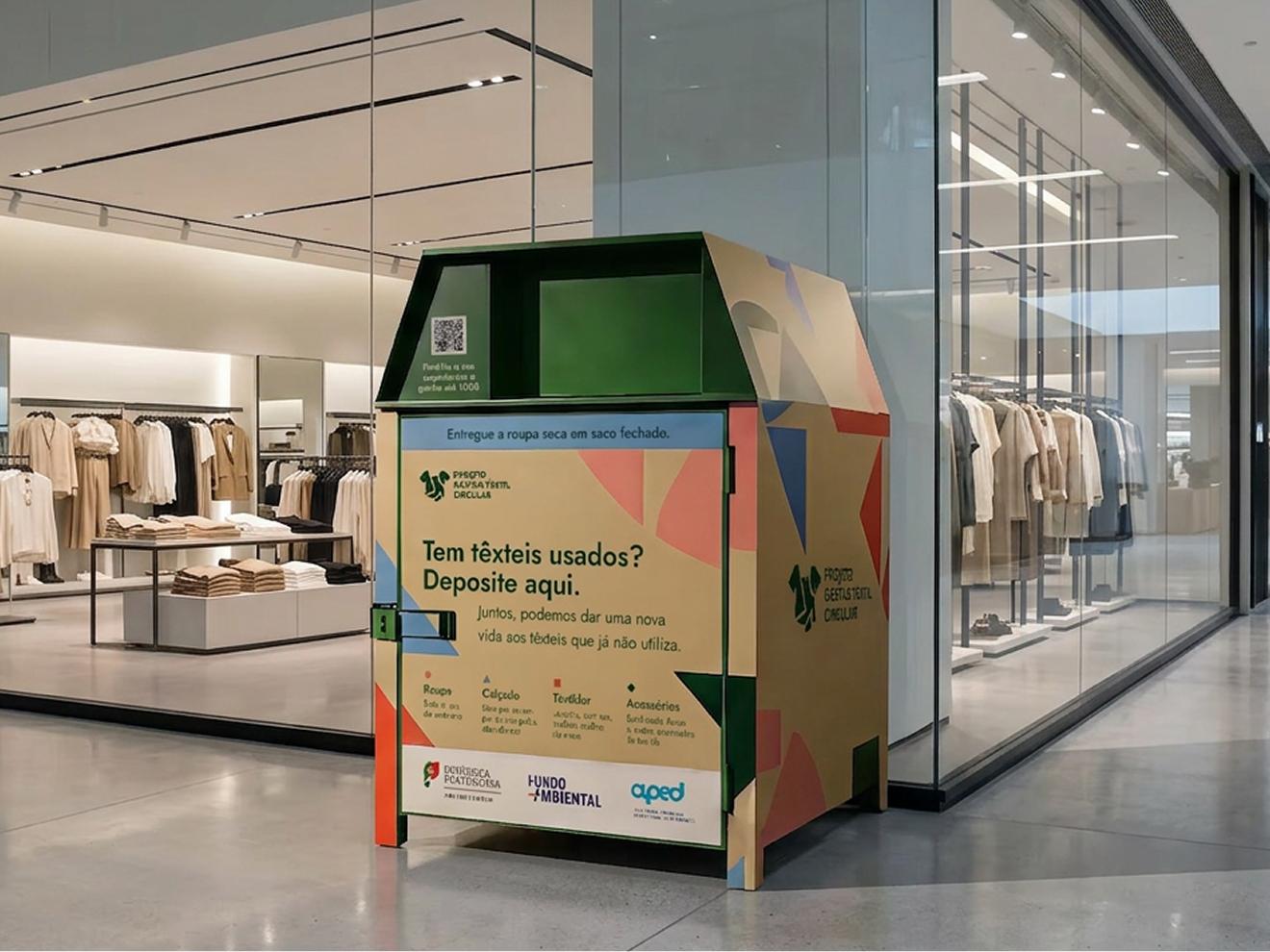
The in-store container, designed as a touchpoint
Collection was designed as a store experience, not a waste point: a container built into the customer journey, frictionless for operations, with its own branding and signage and staff training.
The pilot rolled out across 10 stores —five in Greater Porto, five in Greater Lisbon— of El Corte Inglés, Decathlon, Auchan and Continente.
Reverse logistics and sorting were entrusted to specialist operators —Veolia, Insertega and LIPOR— so the technical complexity stayed invisible to the customer.
Consumers got involved through incentives decoupled from spending
Demand was activated with the same care as the physical experience. A study of Portuguese consumers (1,000 responses) calibrated the campaign before launch, rather than assuming habits.
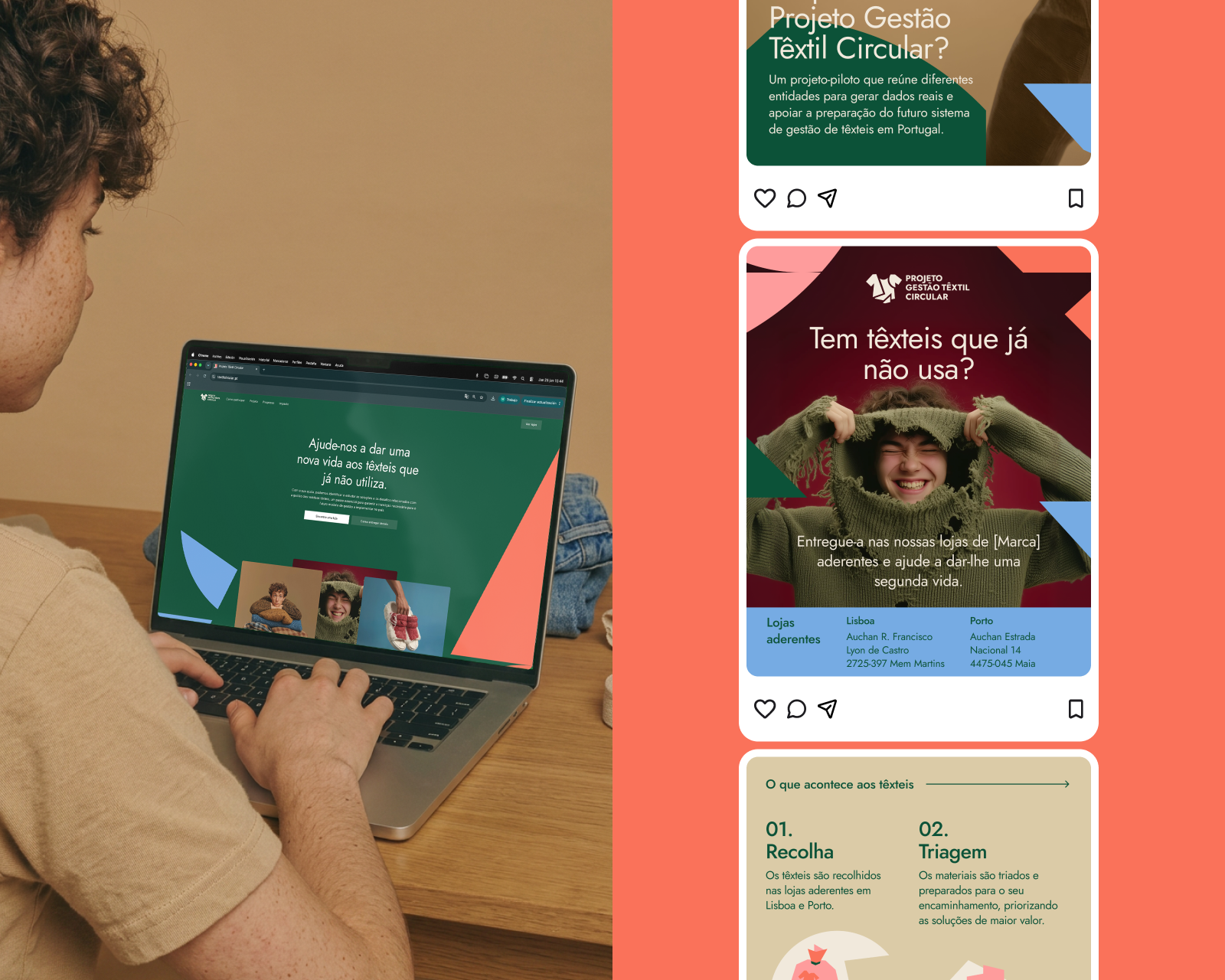
The activation combined communication assets in-store, on the web and on social media with a digital feedback layer: a QR code on the container to listen to consumers continuously and adjust on the go.
The key decision was the incentive model —prize draws for taking part, decoupled from spending.
15 tonnes collected, routed to reuse and recycling
The pilot's goal was demanding: that the textiles collected find their best destination and that almost nothing ends up in landfill. The design prioritised reusing garments in good condition and then recycling the fibres, leaving energy recovery as a last resort.
In six months, 15 tonnes of used textiles were collected —proof that the model works and can be replicated as the basis for a national system.
A smaller share, unfit for reuse or recycling, was turned into a capsule collection, art pieces and store furniture, as a visible showcase of circularity.